Author: Team ClassWork
-
The Astrolabe: A Marvel of Ancient Astronomy and Navigation
Introduction In the annals of scientific history, few instruments have had as profound an impact as the astrolabe. This ancient tool, a testament to human ingenuity, revolutionized the way we understand the heavens and navigate the seas. From its origins in ancient Greece to its refinement in the Islamic world, the astrolabe stands as a…
-
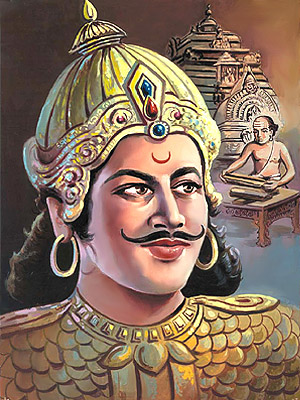
Diplomatic Alliances of Vishnuvardhana of Hoysala
Introduction The Hoysala Empire, under the reign of Vishnuvardhana (1108-1152 CE), witnessed significant expansion and consolidation of power in the Deccan region. His rule marked a period of political astuteness, military prowess, and strategic alliances. This essay delves into the intricate web of diplomatic alliances formed by Vishnuvardhana, exploring their motivations, impacts, and lasting legacy…
-
Vishnuvardhana of Hoysala: A Legendary Monarch
Vishnuvardhana of Hoysala: A Legendary Monarch Early Life and Ascension Vishnuvardhana, originally named Bittideva, was a prominent king of the Hoysala dynasty in South India. Born in 1108 CE, he ascended the throne around 1110 CE, succeeding his elder brother Vinayaditya. Vishnuvardhana’s reign marked a significant period in the Hoysala dynasty, characterized by military conquests,…
-
Administartion of Mohmmad Gawan
Certainly! To write about the administration of Mohammad Gawan in a comprehensive and engaging manner, I’ll start by creating a detailed outline. Here’s the proposed outline: Outline Introduction Background Administrative Reforms Military Reforms Education and Cultural Contributions Trade and Commerce Challenges and Opposition Legacy and Impact Conclusion Administration of Mohammad Gawan Introduction Mohammad Gawan, an…
-

Number Lines: Understanding Natural Numbers, Whole Numbers, Integers, and Rational Numbers
A number line is a visual representation of numbers arranged in a straight line. Each point on the line corresponds to a number, with equal spacing between each point. The center of the number line is typically marked by zero, and numbers to the right are positive, while those to the left are negative.
-

The Origin and Sources of the Hoysalas of Dwarasamudra
The Origin and Sources of the Hoysalas of Dwarasamudra The Hoysalas of Dwarasamudra, a prominent dynasty in South Indian history, have origins shrouded in myth and historical speculation. Emerging in the 10th century, the Hoysalas initially served as feudatories under the Western Chalukyas. Their rise to power began with Vinayaditya, who expanded their influence in…
-
Sources of Hoysalas of Dwarasamudra in History
Sources of Hoysalas of Dwarasamudra in History 1. Inscriptions 2. Literary Sources 3. Temple Architecture 4. Foreign Accounts 5. Coins and Numismatic Evidence 6. Art and Sculpture 7. Archaeological Excavations 8. Religious Texts and Endowments 9. Contemporary Kingdoms’ Records 10. Mythology and Legends Conclusion The sources of the Hoysalas of Dwarasamudra in history are multifaceted…
-
Poets in the Age of Hoysalas of Dwarasamudra and Their Works
Poets in the Age of Hoysalas of Dwarasamudra and Their Works The Hoysala period, particularly during their reign from the 11th to 14th centuries, was a golden era for Kannada literature. The patronage of the Hoysala kings led to a flourishing of literary activity, with many poets creating enduring works that are celebrated to this…
-
Hoysalas of Dwarasamudra -1
the Hoysalas of Dwarasamudra exemplify a golden era of South Indian civilization. Their contributions to architecture, culture, and political history underscore the dynasty’s pivotal role in shaping the region’s historical narrative. For B.A. students, Introduction to the Hoysalas of Dwarasamudra The Hoysala dynasty, known for its significant contributions to South Indian culture, art, and architecture,…
-

The Kadamba Dynasty
The Kadamba Dynasty [The Kadamba Dynasty holds a significant place in the history of Karnataka and South India, marking the beginning of the region’s distinct cultural and political identity. Founded in 345 CE by Mayurasharma, the Kadamba Dynasty established its capital at Banavasi, in present-day Uttara Kannada district. This dynasty is celebrated for its contributions…
-

Importance of Sources in Writing History
Introduction History, in its essence, is a meticulous reconstruction of the past. This reconstruction relies heavily on sources, which are the foundational materials necessary for constructing historical narratives. Sources provide the details and context of particular periods, helping us understand the events, cultures, and people of the past. The role of sources in history can…
-

Chalukya Dynasty
[The Chalukya Dynasty was a powerful Indian dynasty that ruled parts of southern and central India from the 6th to the 12th centuries. It is divided into three main branches: the Badami Chalukyas, the Eastern Chalukyas, and the Western Chalukyas. The Badami Chalukyas (543–753 CE) are known for their amazing rock-cut temples in Badami, Aihole,…
-

Kingdoms of Karnataka
[Karnataka, a state in the southern part of India, has a rich and diverse history marked by the rise and fall of several powerful kingdoms. These kingdoms have left an indelible mark on the culture, architecture, and heritage of the region. Here are some of the most prominent kingdoms of Karnataka] The Kadamba Dynasty (345-525…
-

1.2 Agricultural Practices
[In agriculture, when plants of the same kind are cultivated on a large scale in one place, it is referred to as a crop, such as a field of wheat. Crops are classified based on the season they grow in, with India having diverse climatic conditions that support a variety of crops. The two main…
-

Introduction to Crop Production & Managment
[ Green plants make their own food through a process called photosynthesis, using sunlight, carbon dioxide, and water to produce glucose and oxygen. Animals, including humans, cannot perform photosynthesis and must get their food by eating plants or other animals. We need food for energy and nutrients, which are necessary for our bodies to function,…