Author: Team ClassWork
-
1.7 Research and Scientific Method
Research and the scientific method are closely connected because research becomes truly systematic and reliable only when it follows the principles of the scientific method. The scientific method refers to an organized, logical, and objective way of investigating problems. It ensures that knowledge is not based on personal belief or guesswork but on verifiable evidence.…
-
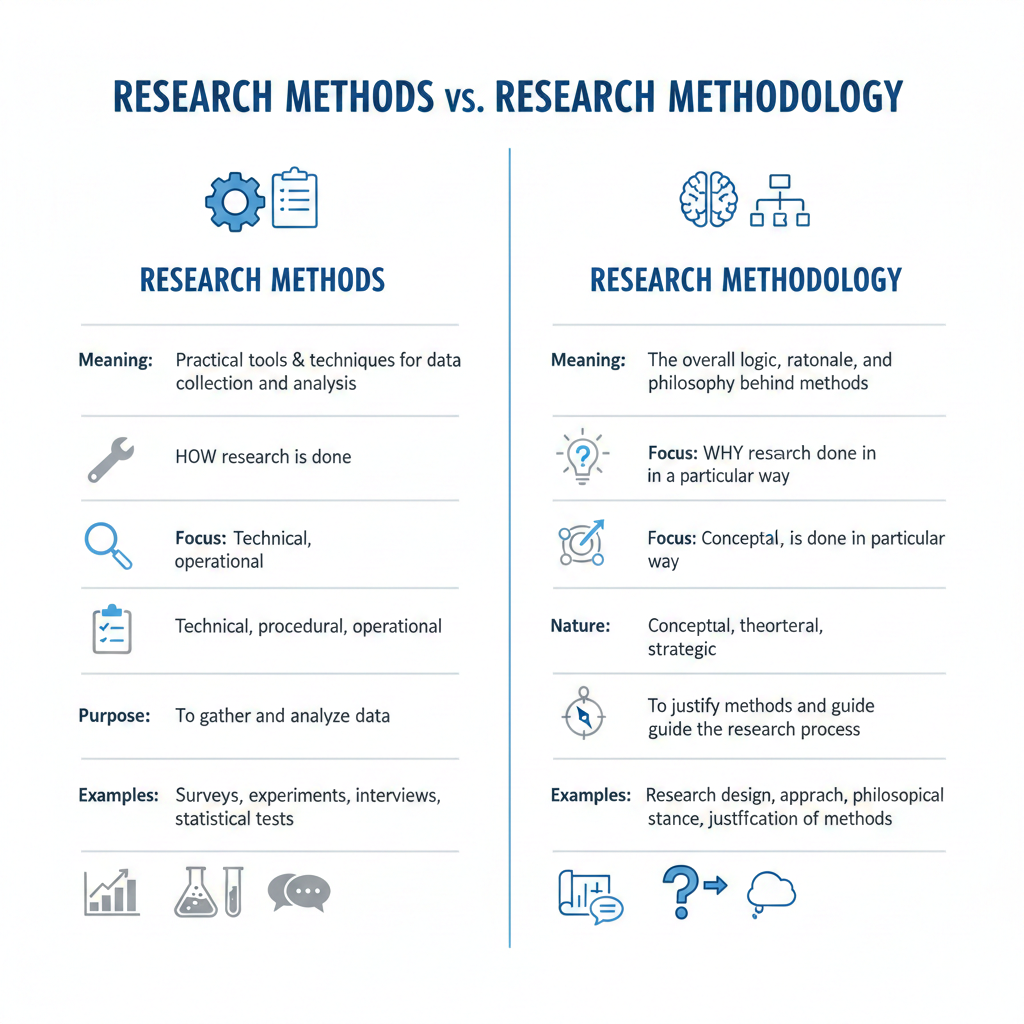
1.6 Research Methods vs Research Methodology
A. Paragraph-wise Explanation Research methods and research methodology are closely related but conceptually different aspects of the research process. Research methods refer to the specific techniques, tools, procedures, and ways in which data is collected, measured, and analyzed. They are the operational steps a researcher takes—such as surveys, experiments, interviews, observations, statistical tests, sampling procedures,…
-
1.5 Significance of Research
(PhD-Level Elaborated Notes) Paragraph-wise Explanation Research holds immense significance because it is the primary source of new knowledge, scientific advancement, policy development, and social progress. It enables a systematic investigation into problems, leading to improved understanding, accurate solutions, and evidence-based decision-making. Through research, theories are developed, tested, and refined, contributing to the growth of disciplines.…
-
1.4RESEARCH APPROACHES
Research approach refers to the overall plan, logic, and philosophical orientation that guides how research is designed, conducted, analyzed, and interpreted.It explains how knowledge is generated, how data is collected, and how results are interpreted. In PhD-level methodology, research approaches are usually divided into: Below is the detailed explanation. 1. Quantitative Research Approach Paragraph-wise Explanation…
-
4. Conceptual vs Empirical Research
A. Conceptual Research Paragraph-wise Explanation Conceptual research is based on theoretical frameworks, ideas, and concepts. Researchers use logical reasoning, intellectual analysis, and theoretical modeling to develop new constructs or reinterpret existing theories. No empirical (field or lab) data is collected. Conceptual research is common in philosophy, theoretical physics, mathematics, and theoretical social sciences. Point-wise Notes…
-
3. Quantitative vs Qualitative Research
A. Quantitative Research Paragraph-wise Explanation Quantitative research emphasizes numbers, measurements, and statistical analysis. It is structured, objective, and follows systematic procedures like sampling, instrument design, and statistical testing. Researchers use quantitative methods to measure variables, test hypotheses, identify patterns, and generalize findings to larger populations. It is commonly used in scientific, economic, and social research…
-
2. Applied Research vs Fundamental (Basic) Research
A. Fundamental / Basic Research Paragraph-wise Explanation Fundamental research is conducted to advance theoretical knowledge without immediate practical application. It focuses on uncovering general principles, developing theories, and expanding academic understanding. Basic research aims to create new concepts and frameworks that can later be applied in practical settings. It is curiosity-driven and forms the foundation…
-
Descriptive Research vs Analytical Research
A. Descriptive Research Paragraph-wise Explanation Descriptive research focuses on describing the characteristics, facts, or phenomena as they exist in the present. It does not manipulate variables; instead, it collects detailed information to provide an accurate picture of a situation. Researchers typically observe, survey, or record information as it naturally occurs. The goal is “what is…
-
Classification of Research: A Systematic Overview of Major Types and Their Applications
Research is a structured process that can be classified in multiple ways depending on its purpose, methodology, and the nature of investigation. These classifications help researchers select appropriate methods and ensure that studies are conducted in a logical, scientific, and effective manner. Broadly, research types can be understood through their objectives, data characteristics, and operational…
-
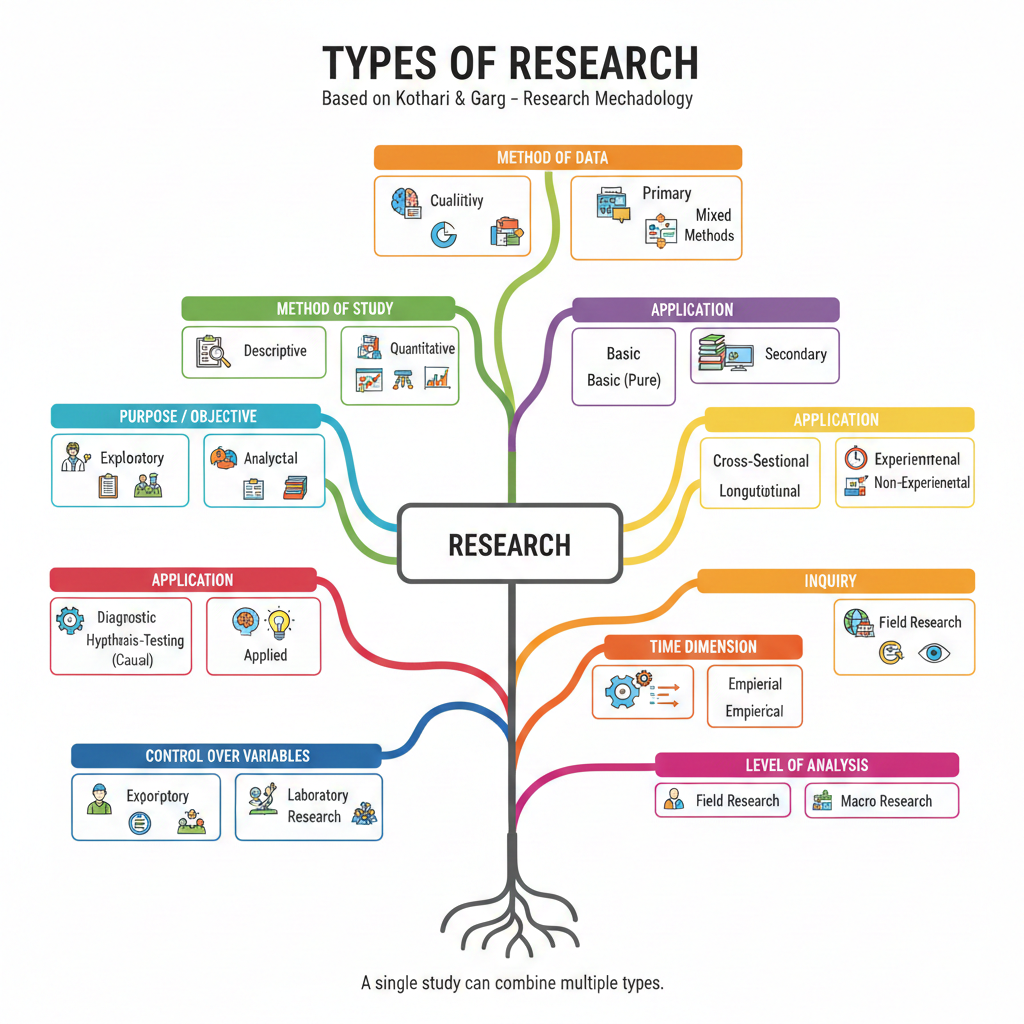
Classification of Research: A Comprehensive Framework Based on Purpose, Methodology, Data, and Application (With Reference to Kothari’s Typology)
Research is a highly structured intellectual activity, and its classification helps scholars understand its nature, purpose, and methodological orientation. According to research methodology experts such as C. R. Kothari, research can be categorized in multiple ways depending on its objective, approach, type of data used, and practical application. These classifications are not mutually exclusive; rather,…
-
Objectives of Research: A Systematic Framework for Knowledge Discovery, Explanation, and Scientific Advancement
Research objectives define the purpose and direction of a study by clarifying what the researcher intends to achieve through systematic inquiry. They serve as the backbone of any research work, ensuring that the investigation remains focused, meaningful, and scientifically valid. In essence, research objectives translate a broad problem into specific, measurable goals that guide the…
-
Research: A Systematic, Empirical, and Logical Pathway to Knowledge Creation and Scientific Discovery
Research is widely recognized as a systematic and critical investigation aimed at generating new knowledge or validating existing theories and ideas. The word “research” originates from the French term rechercher, meaning “to search again,” which reflects the careful, repeated, and thoughtful nature of inquiry involved in the process. It is not a casual activity but…
-
🖥️💡 What is Computer Science?
👋 Introduction Have you ever wondered how your phone knows your face, how websites work, or how video games are made? 🎮💻Well, that’s all thanks to something called Computer Science! 🤔 So, What Is Computer Science? Computer Science is the study of how computers work and how we can make them do useful things. 🧠💻…
-

From Checkers to ChatGPT: The Amazing Journey of Machine Learning 🧠🚀
👋 Welcome, Future Innovators!Are you curious about how machines learn, think, and even create art or write like humans? 🤖✨ You’re in the right place! In this journey, we’ll explore the fascinating evolution of Machine Learning (ML)—from its humble beginnings in the 1950s to the powerful AI systems we use today like ChatGPT and self-driving…
-

📚 Concept of the Day: Opportunity Cost
🔍 What is Opportunity Cost? Opportunity cost is the value of the next best alternative that you give up when you make a choice. In simpler words: Whenever you choose one thing, you’re also choosing to miss out on something else. That “something else” is your opportunity cost. 💡 Why Does It Matter? Every time…